Construction-Project-Cornwall

Site Diary - 16th Century Farmhouse

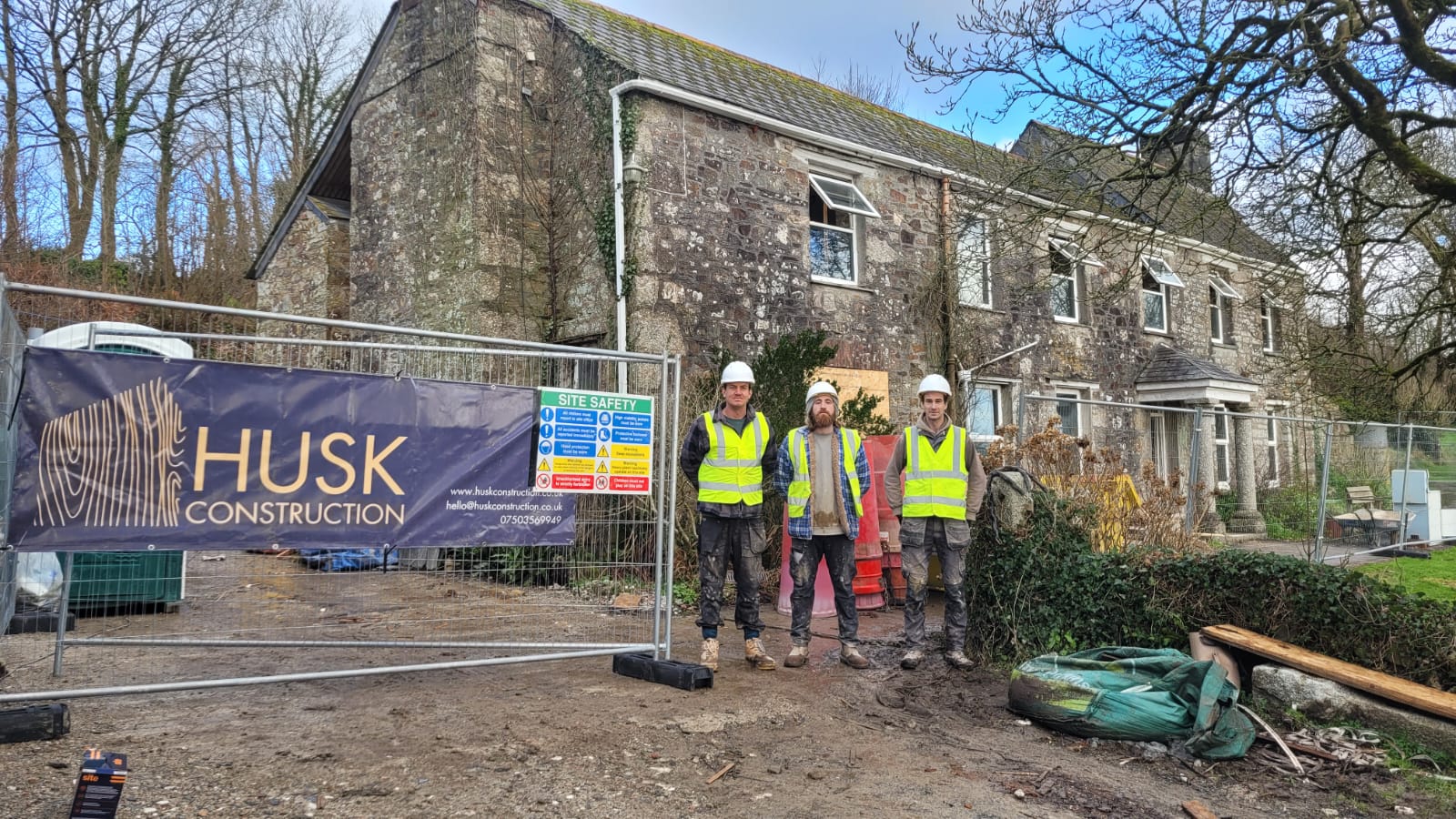
Structural remediation, extension and deep retro-fit on a beautiful stone farmhouse in Nanstallon, Cornwall.

A collaborative approach

By working closely with the client, structural engineering team and architects STUDIO/gather, this very special project has been a truly collaborative approach from Day 1, as the original structure has been carefully revealed to inform structural and design decisions. Great care has been taken to preserve the character and integrity of the building throughout the process. With the demolition and structural remediation phase on the original structure undertaken over the first few months of 2026, we have now completed groundworks and are mid-framing on the large timber extension.

See below for monthly updates on progress.
June
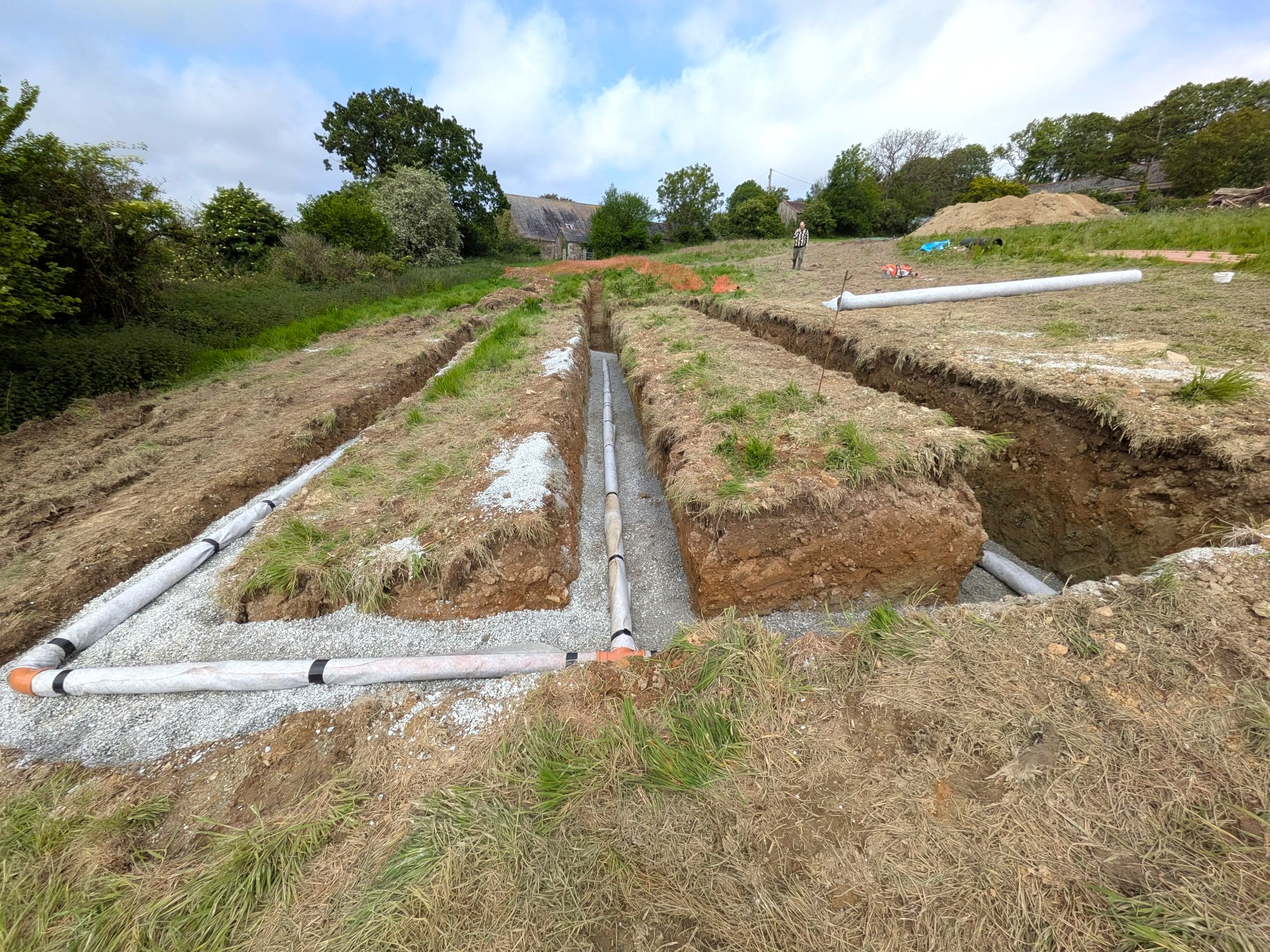
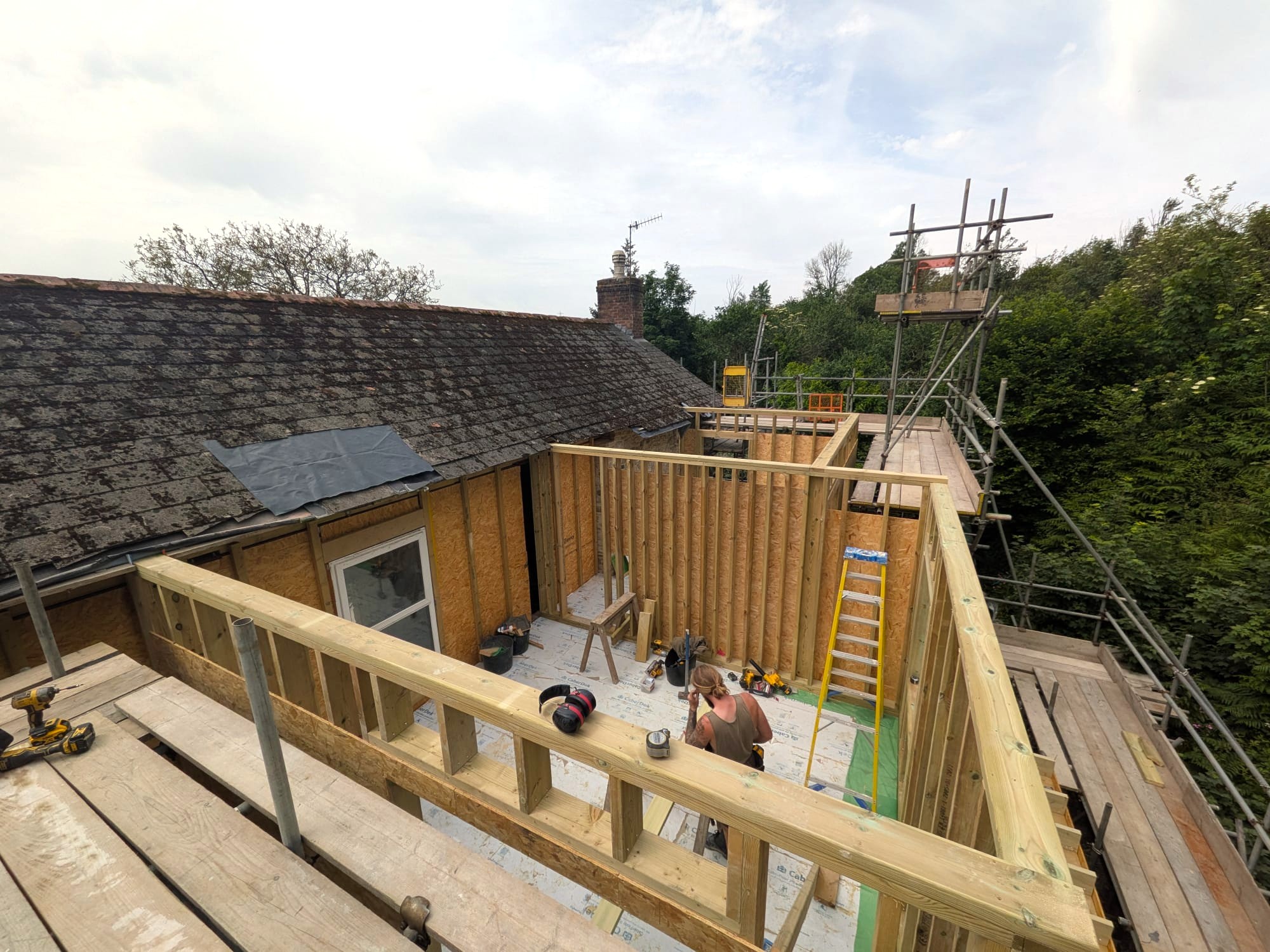
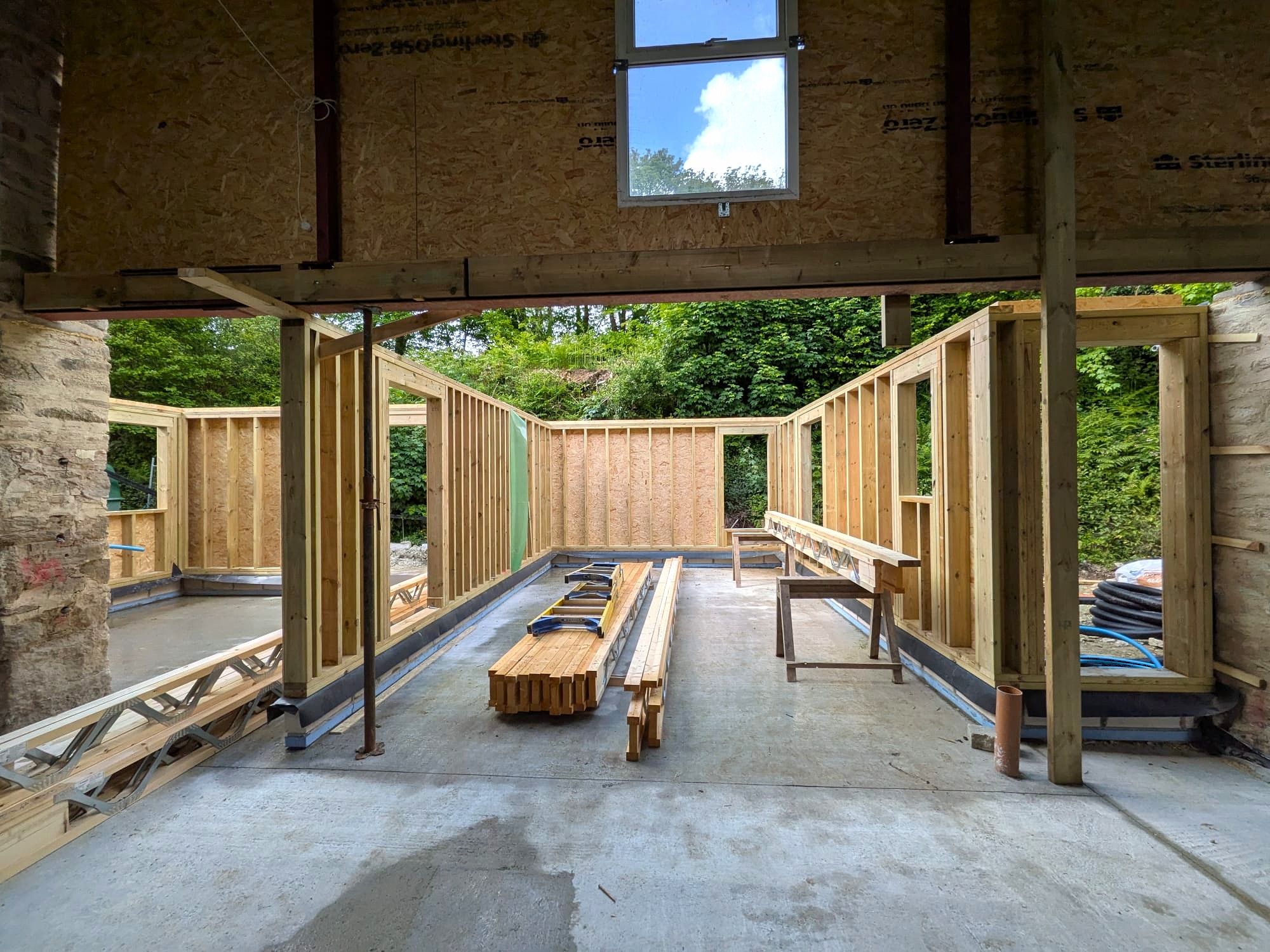
The groundworkers have moved to external drainage work surrounding the house and in the field that sits across the lane.  The carpentry team are cracking on with the framing, getting as far as they can on the structure of the extension without breaching the main roof – the bat window now doesn’t open until October, so we can’t tie the roofs together until then, which is taking some lateral thinking on the build program!
 
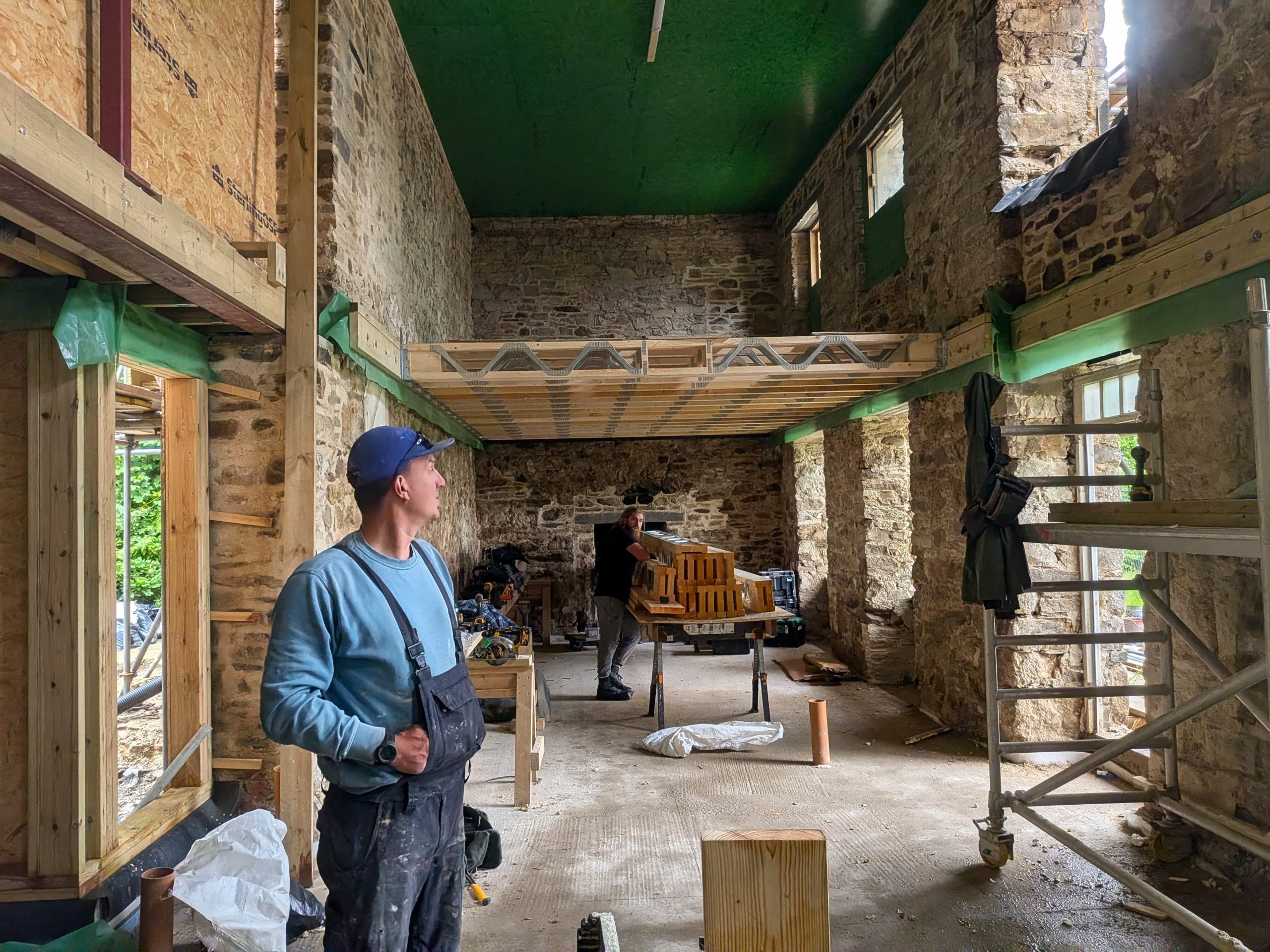
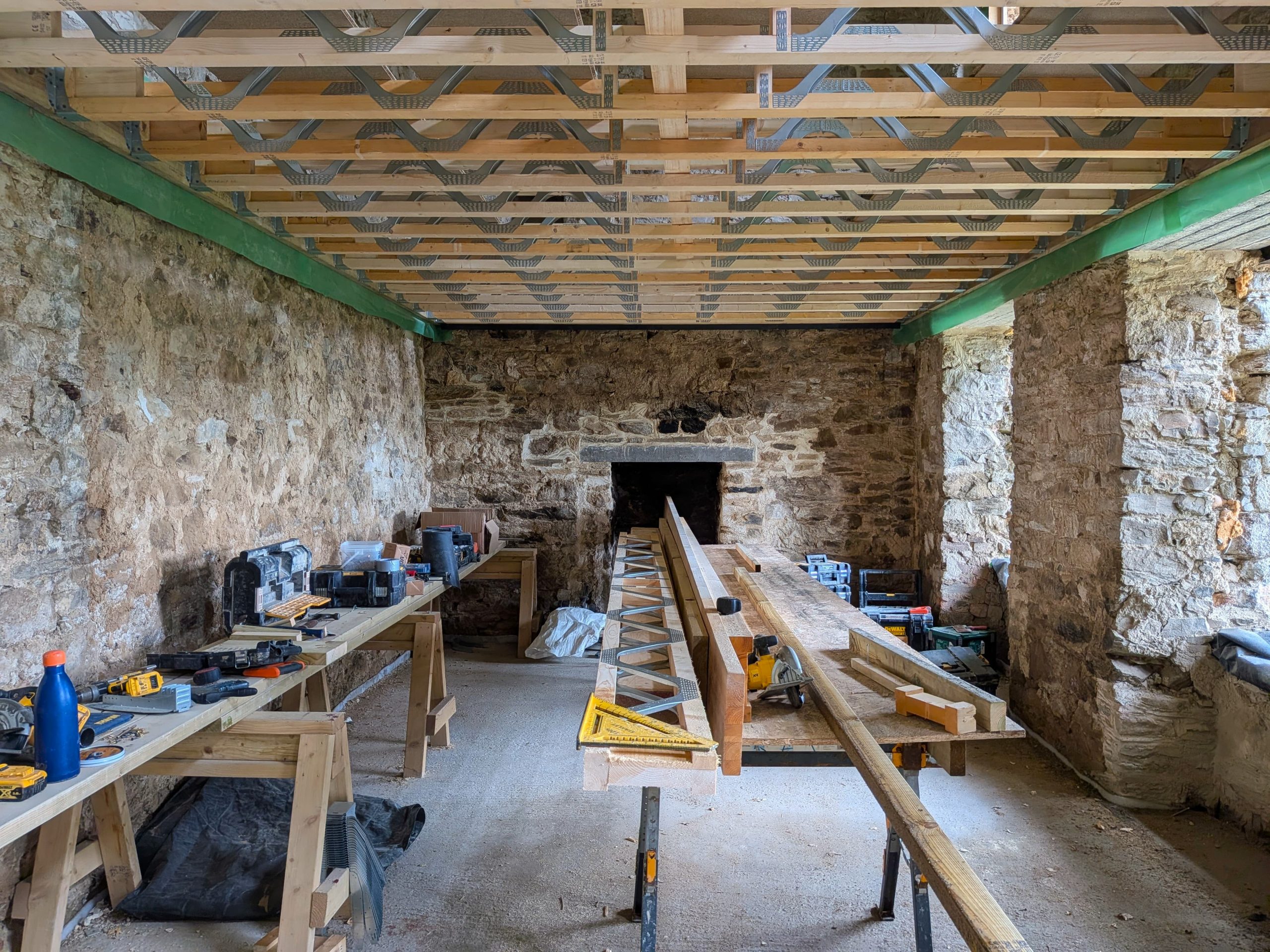
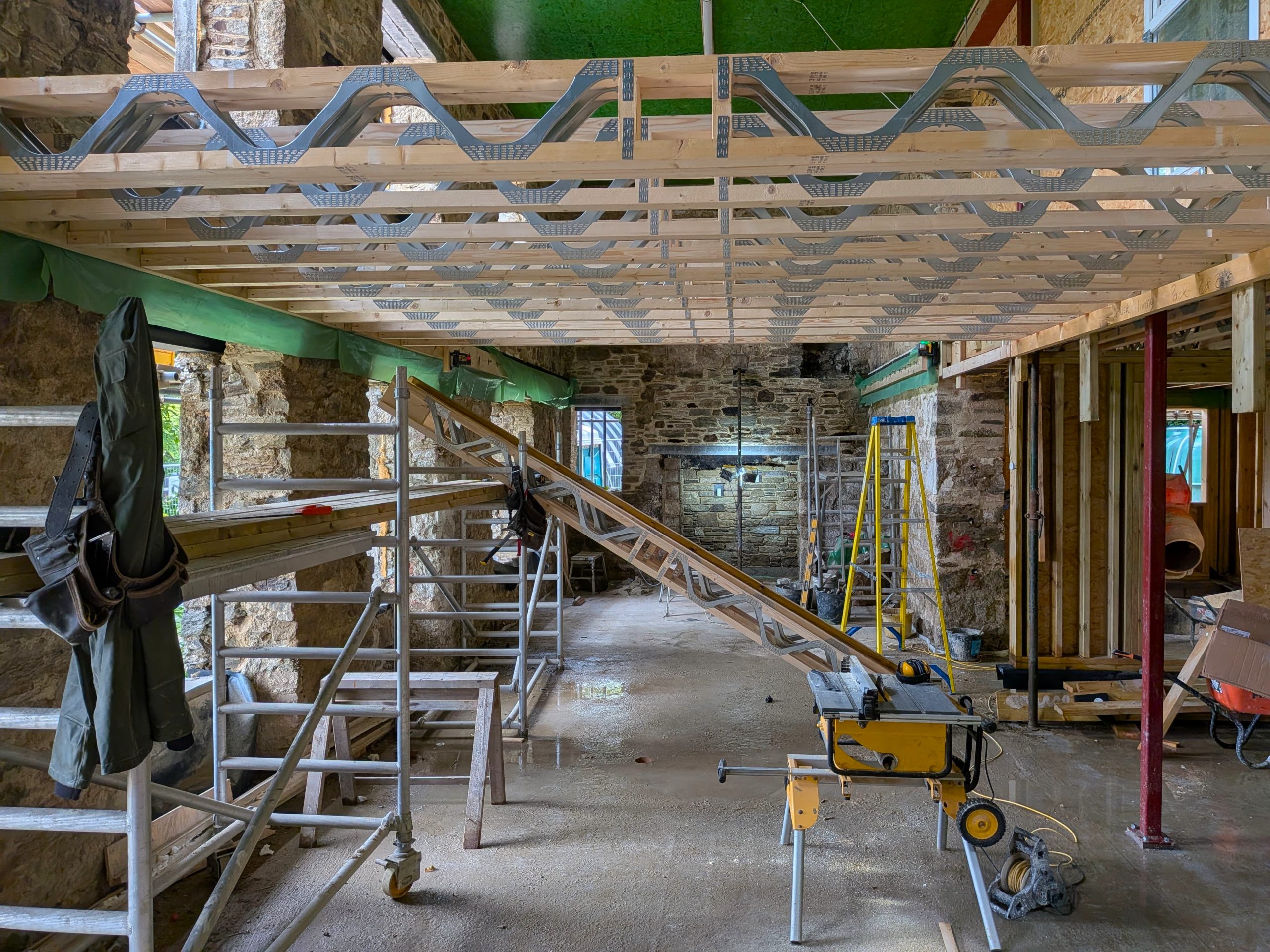
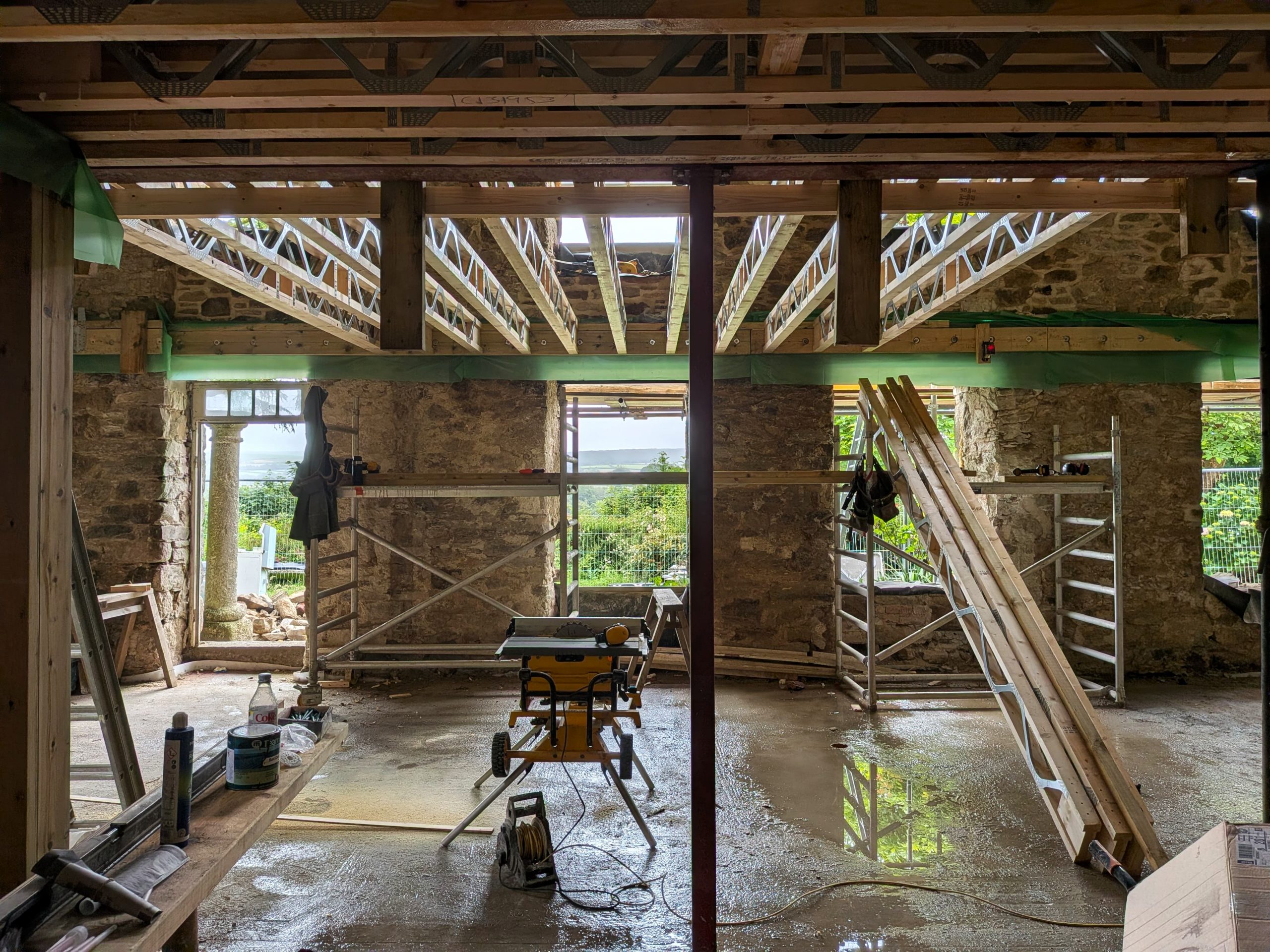
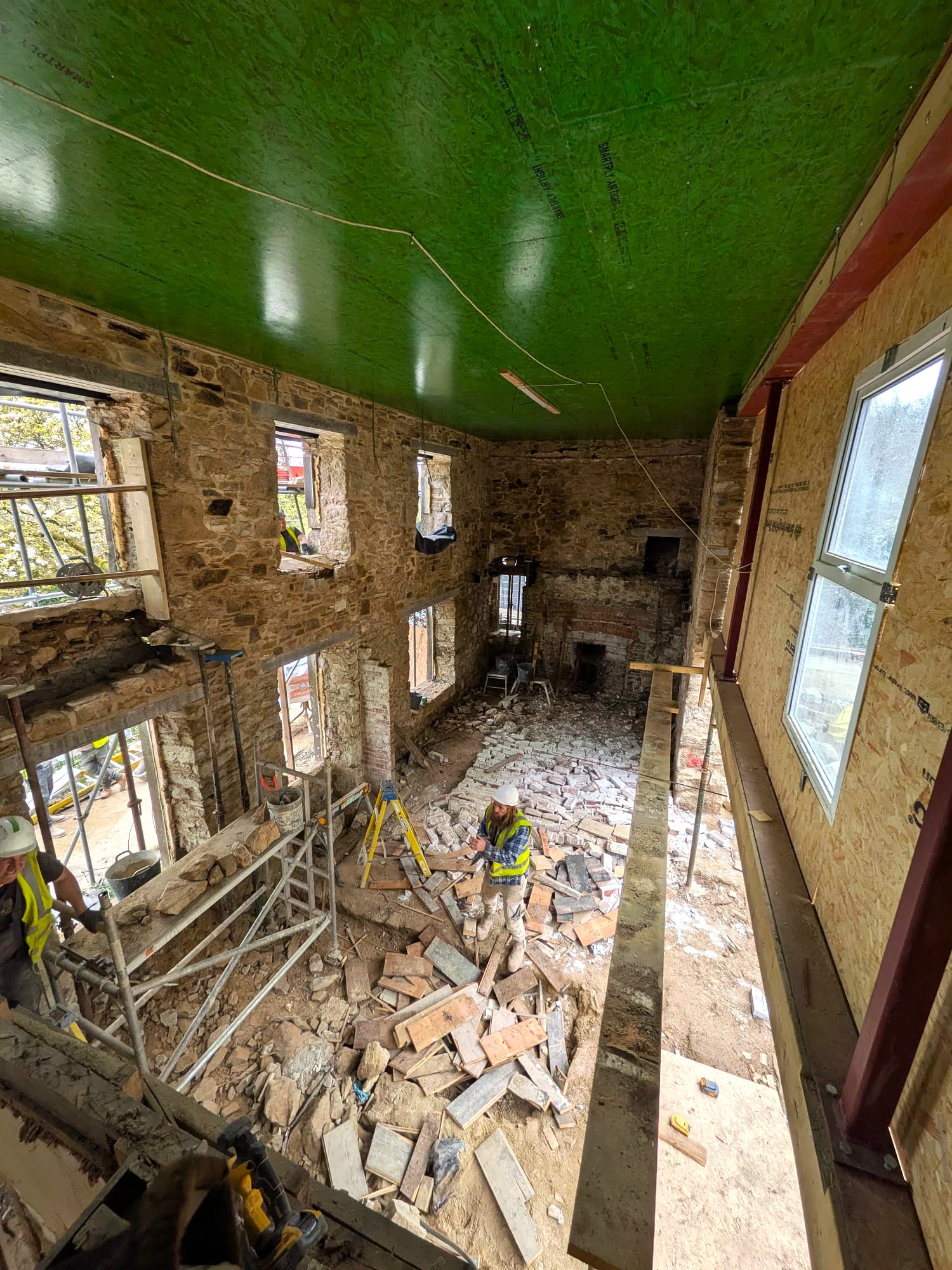
The carpentry team have also prepared a render band and pole plate to receive the new posi-joist first floor deck in the original house, which are currently being installed.   
16th Century Farmhouse Deep Retrofit Ground Source Heat Pump Foundations June
16th Century Farmhouse Deep Retrofit First Floor Interior 1 June
16th Century Farmhouse Deep Retrofit First Floor Extension June
16th Century Farmhouse Deep Retrofit First Floor Timerworks June
16th Century Farmhouse Deep Retrofit First Floor Interior June
16th Century Farmhouse Deep Retrofit First Floor Interior 2 June

May

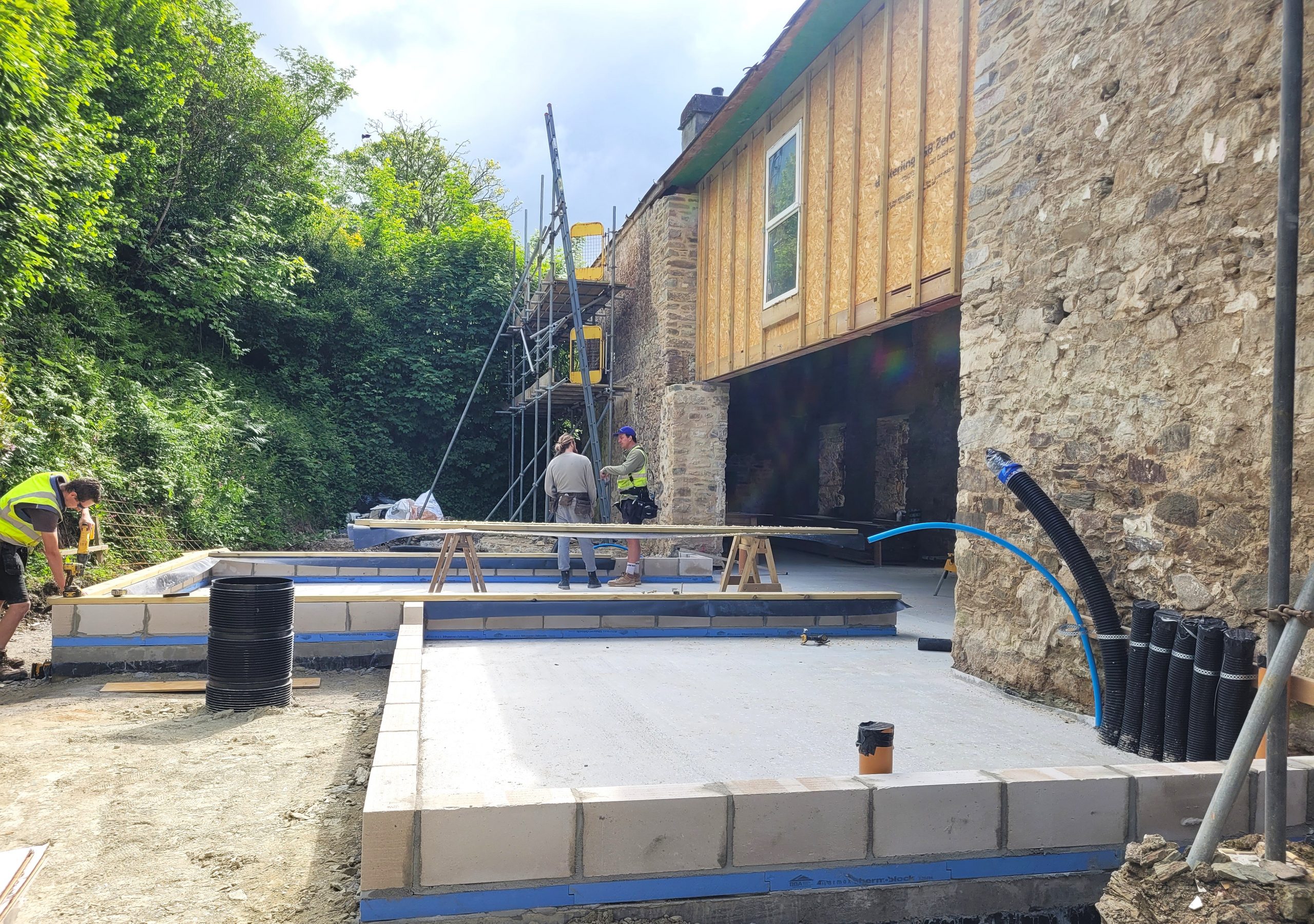
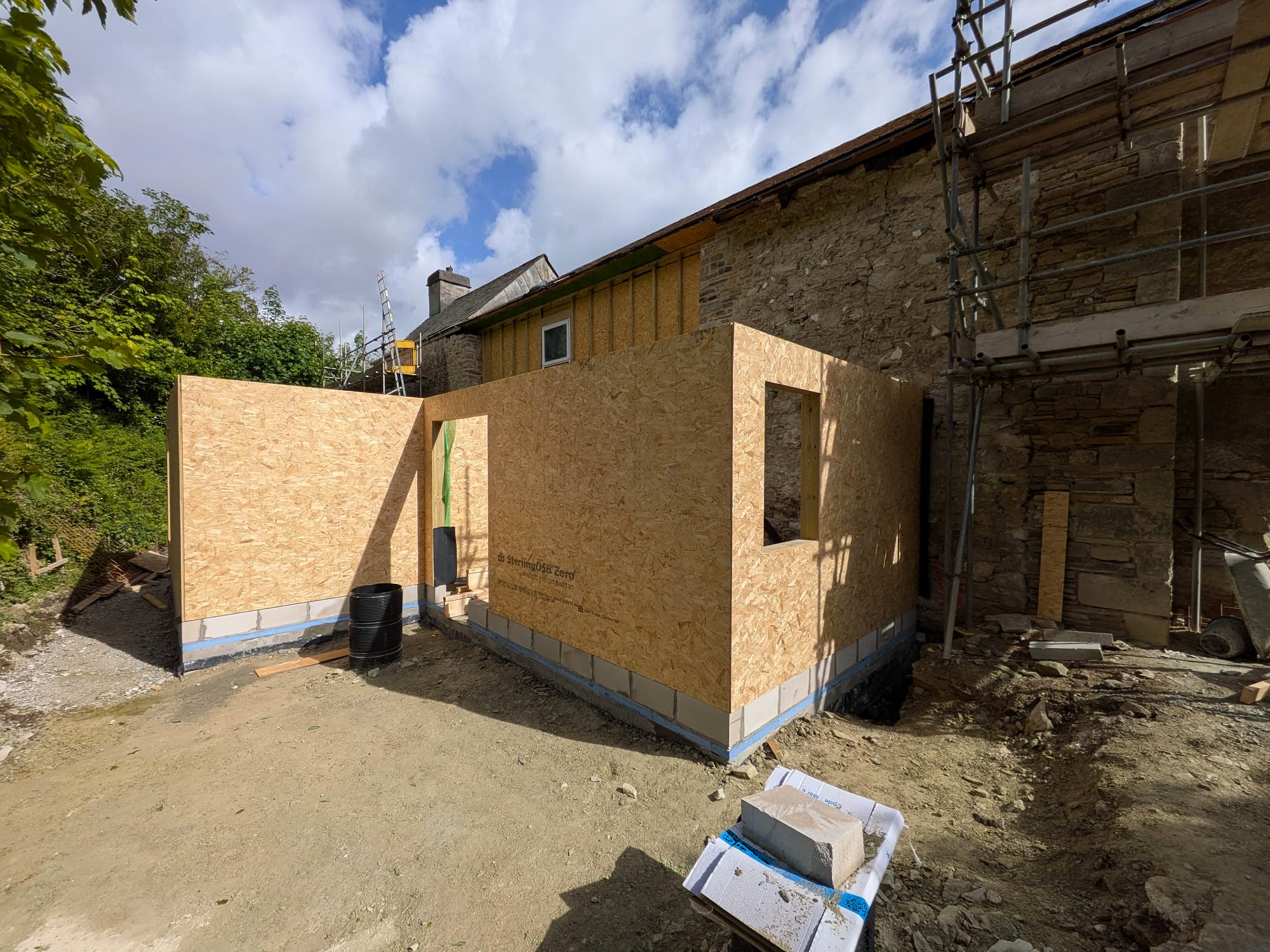
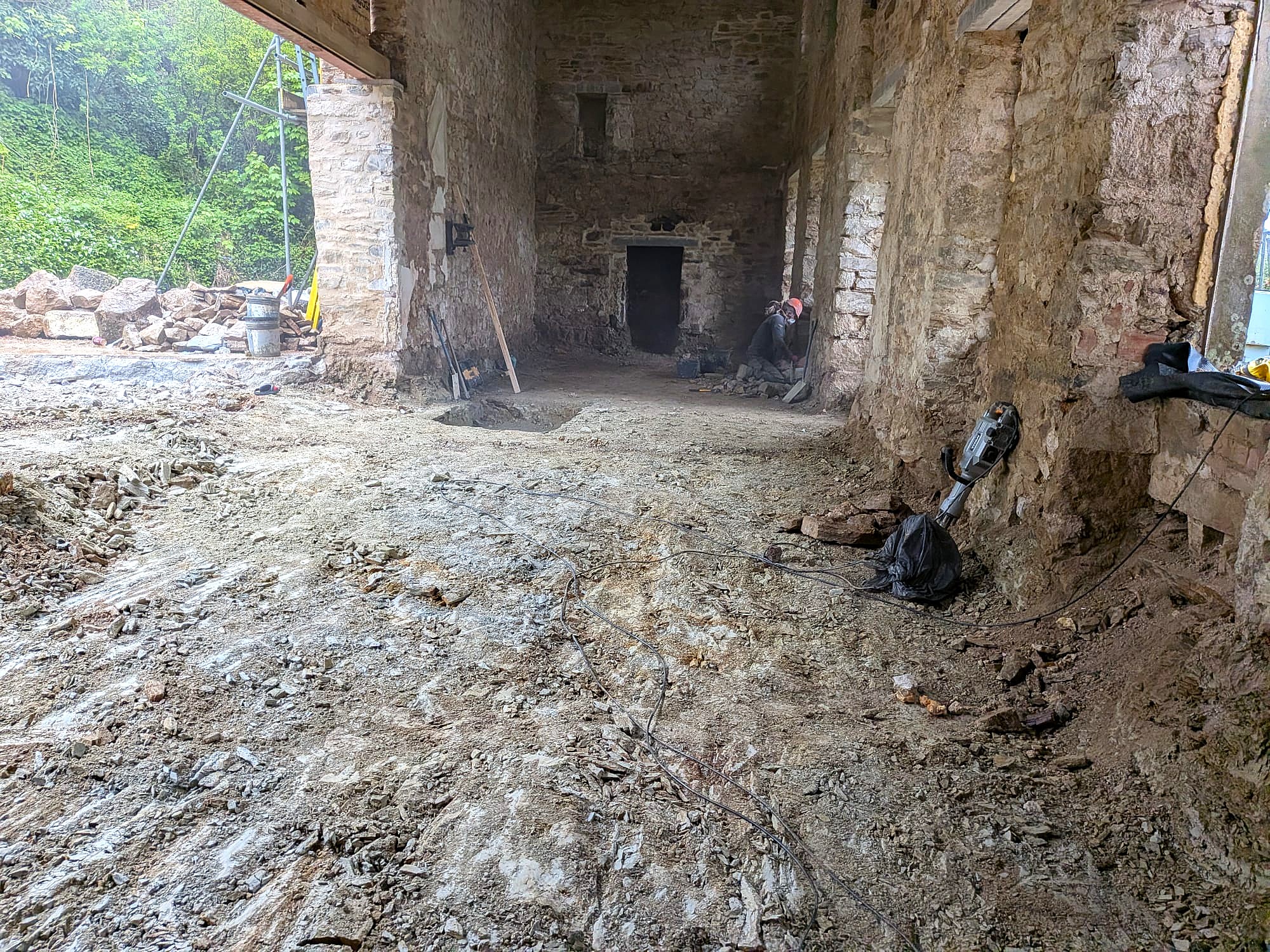
With the internal structure fully stripped, the groundworkers could commence with levelling the floor on the inside of the original house, and preparing the foundation for the extension.  Once all the preparatory work and drainage was set, a slab was poured to unify the new and old footprints, and framing could begin on the extension! 
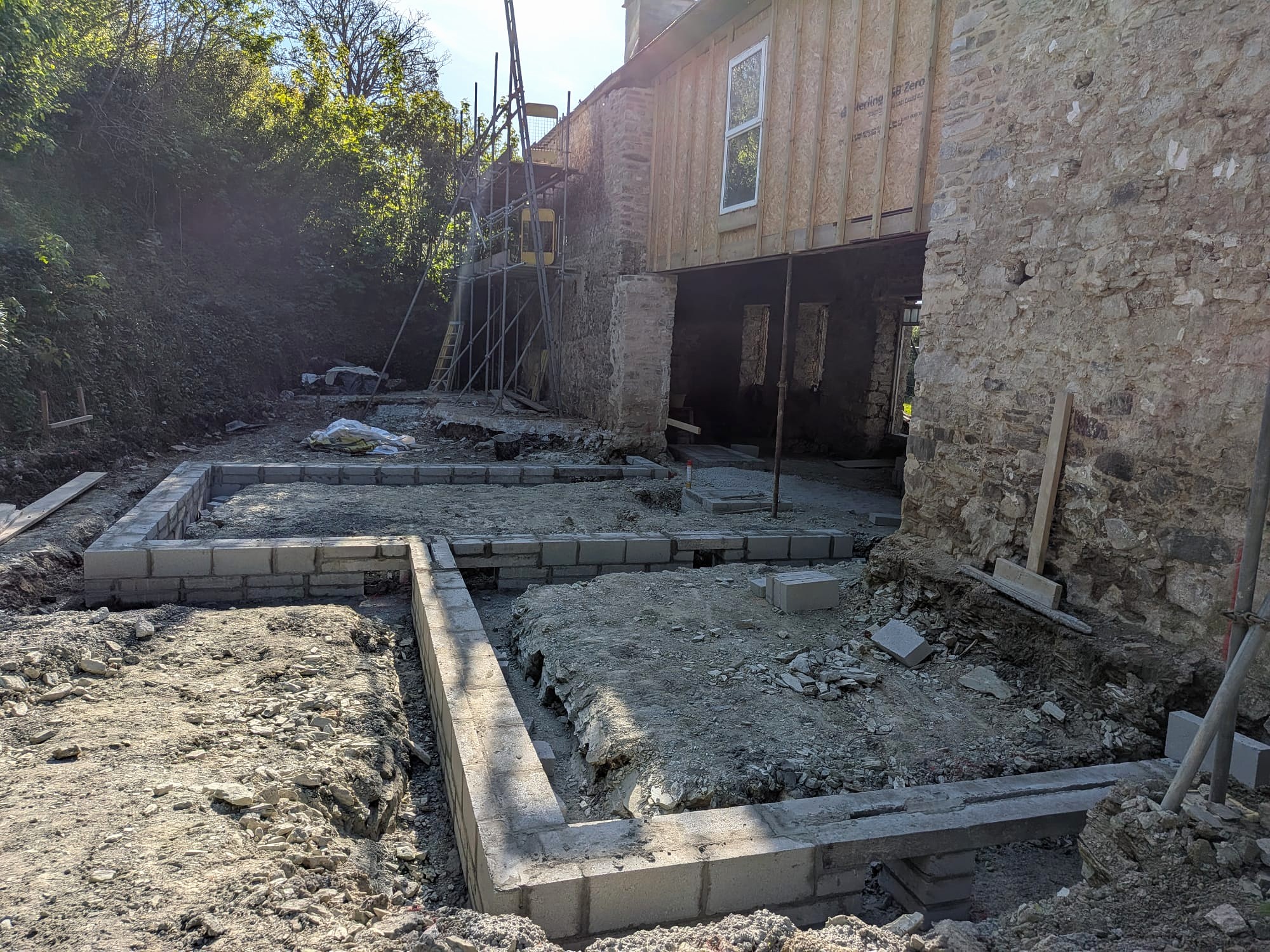
16th Century Farmhouse Deep Retrofit Foundation May
16th Century Farmhouse Deep Retrofit Concrete Pad May
16th Century Farmhouse Deep Retrofit Cladding May
16th Century Farmhouse Deep Retrofit Timber Framing May

April

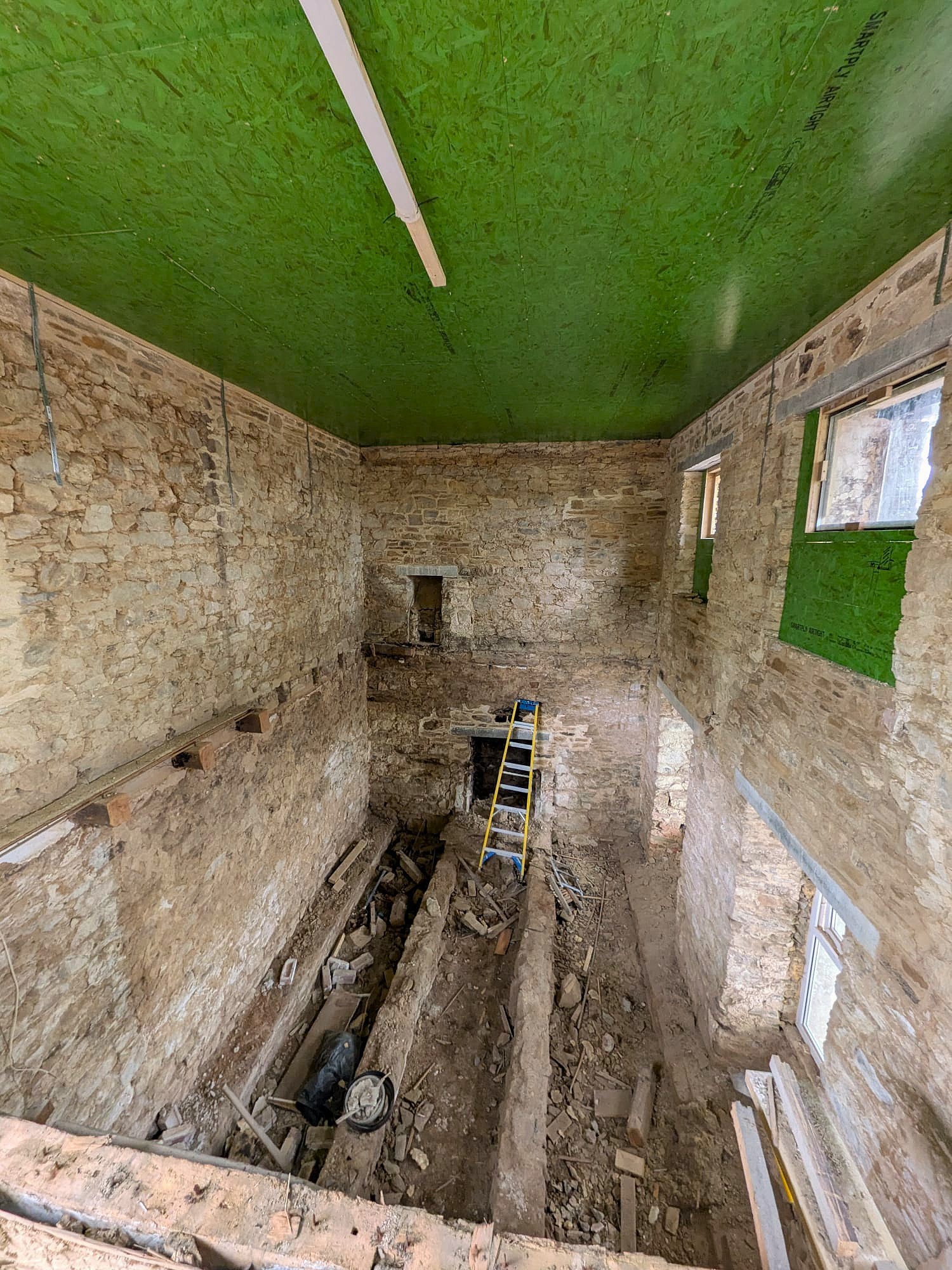
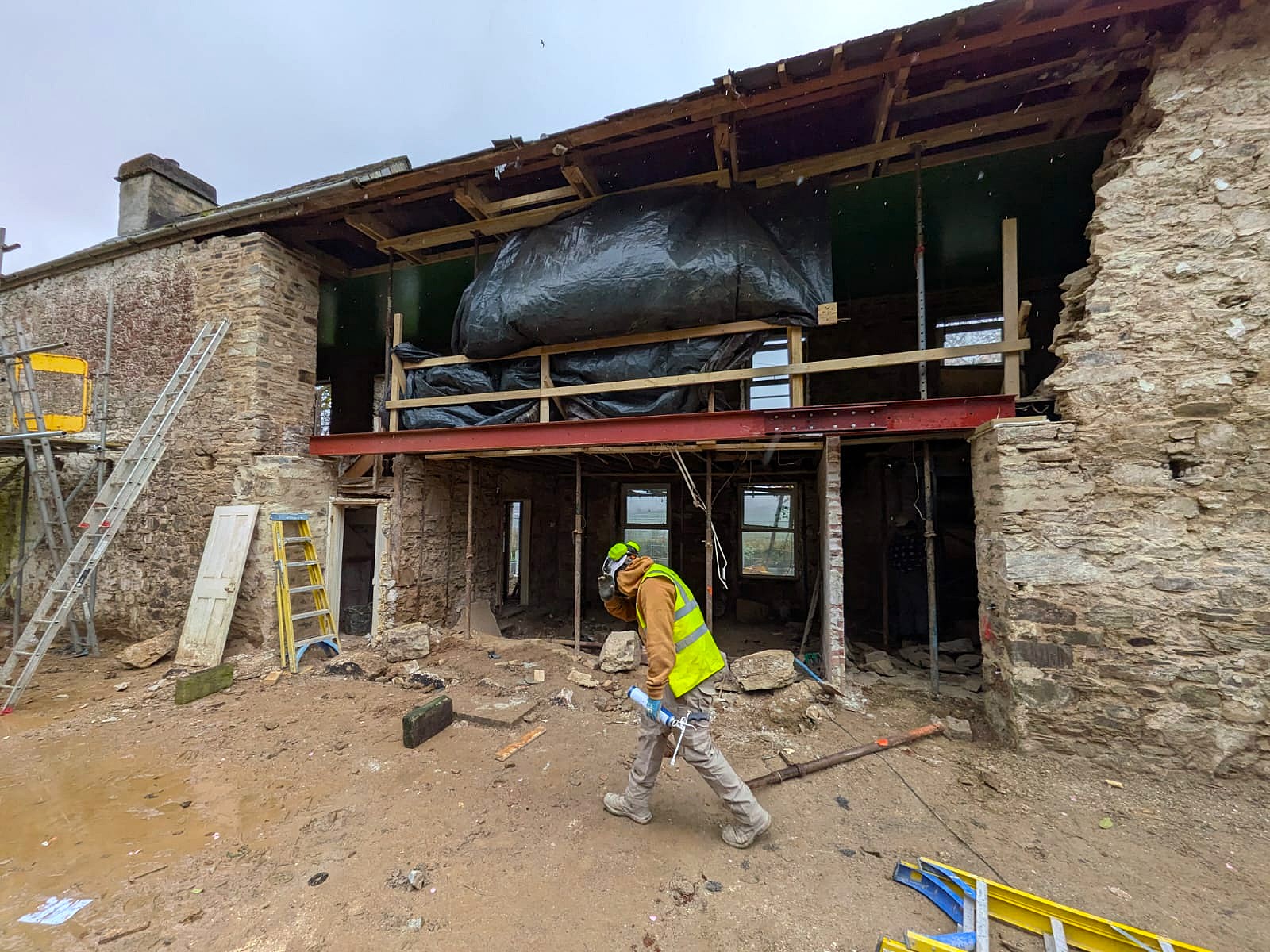
Once the steelwork was installed at eaves level, we were able to install SMARTPLY to the underside of the first floor ceiling, sealing the roof void before the end of the bat window – the period of the year when we are allowed to work on the bat-occupied roof space.
 
The reinstatement of the first floor ceiling then allowed us to remove the ground floor walls and first floor deck in preparation for internal groundworks.  This left the whole stone structure completely stripped, like an empty box – it was pretty incredible to see the space in it’s entirety with no internal structures at all. Studio/GATHER came for a site visit at this stage and obtained some impressive drone footage. 
16th-Century-Farmhouse-Deep-Retrofit-Gutted-April.
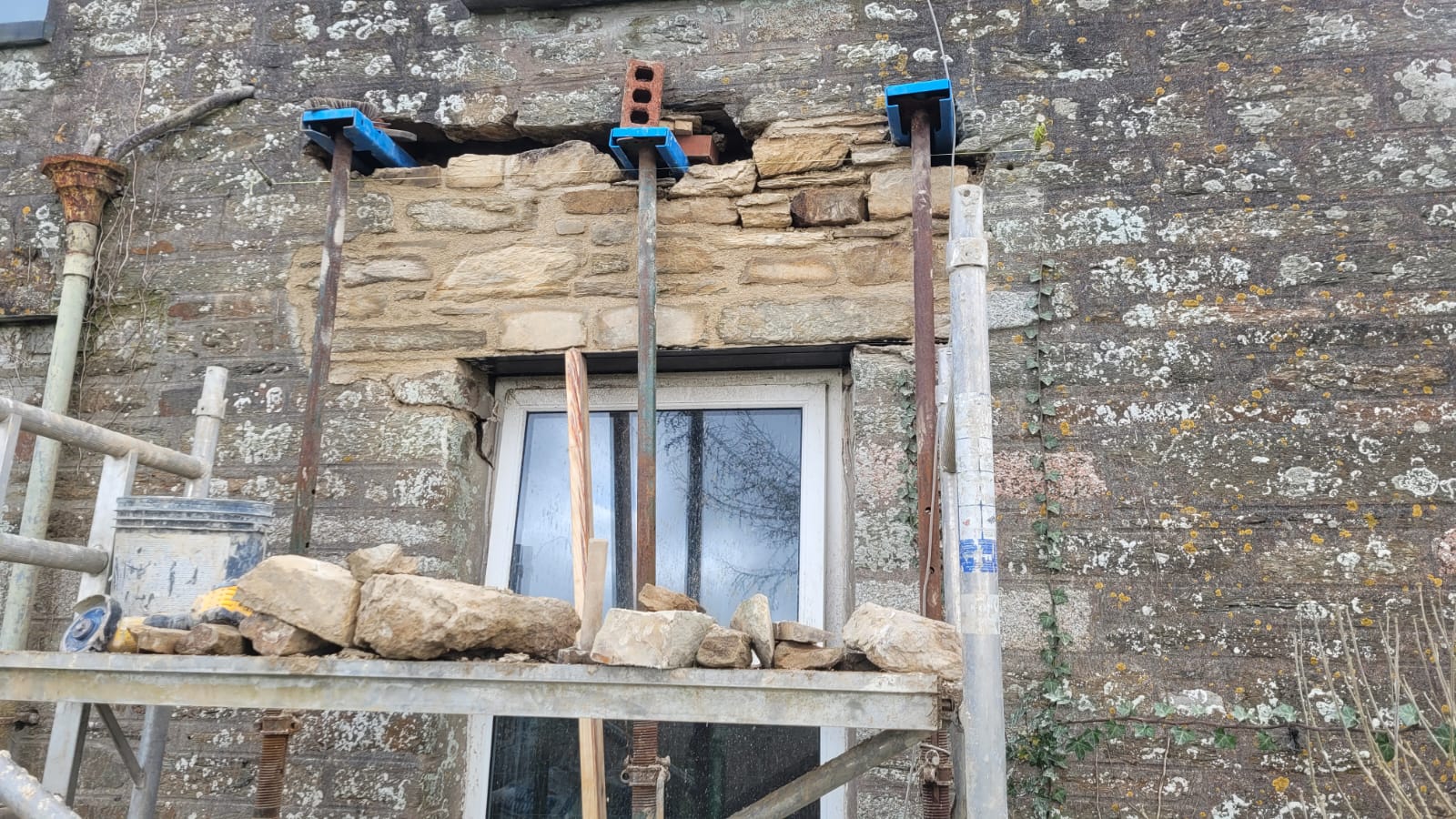
16th Century Farmhouse Deep Retrofit Lintel April
16th Century Farmhouse Deep Retrofit Masonry 2 April
16th Century Farmhouse Deep Retrofit Masonry April

March

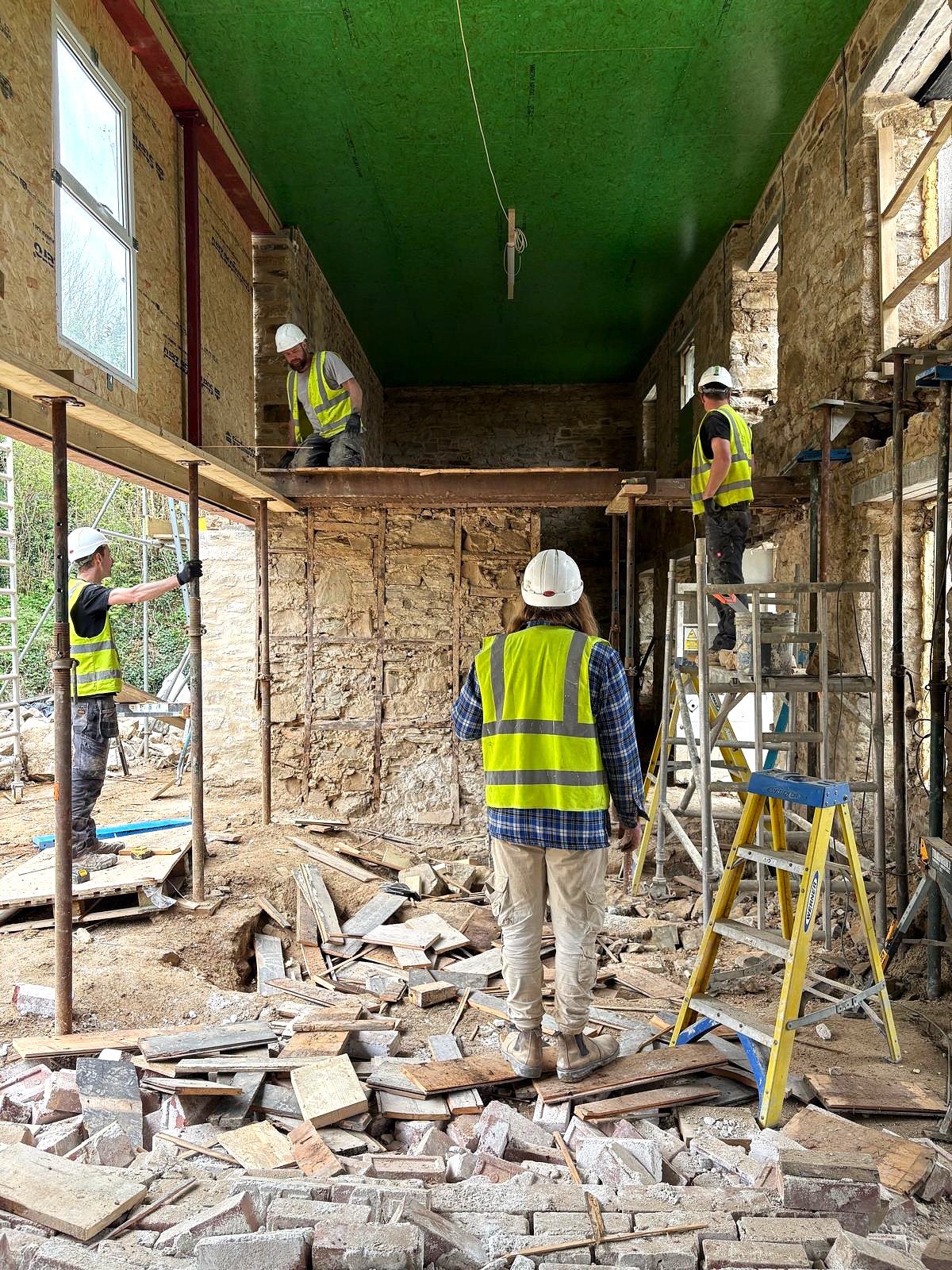
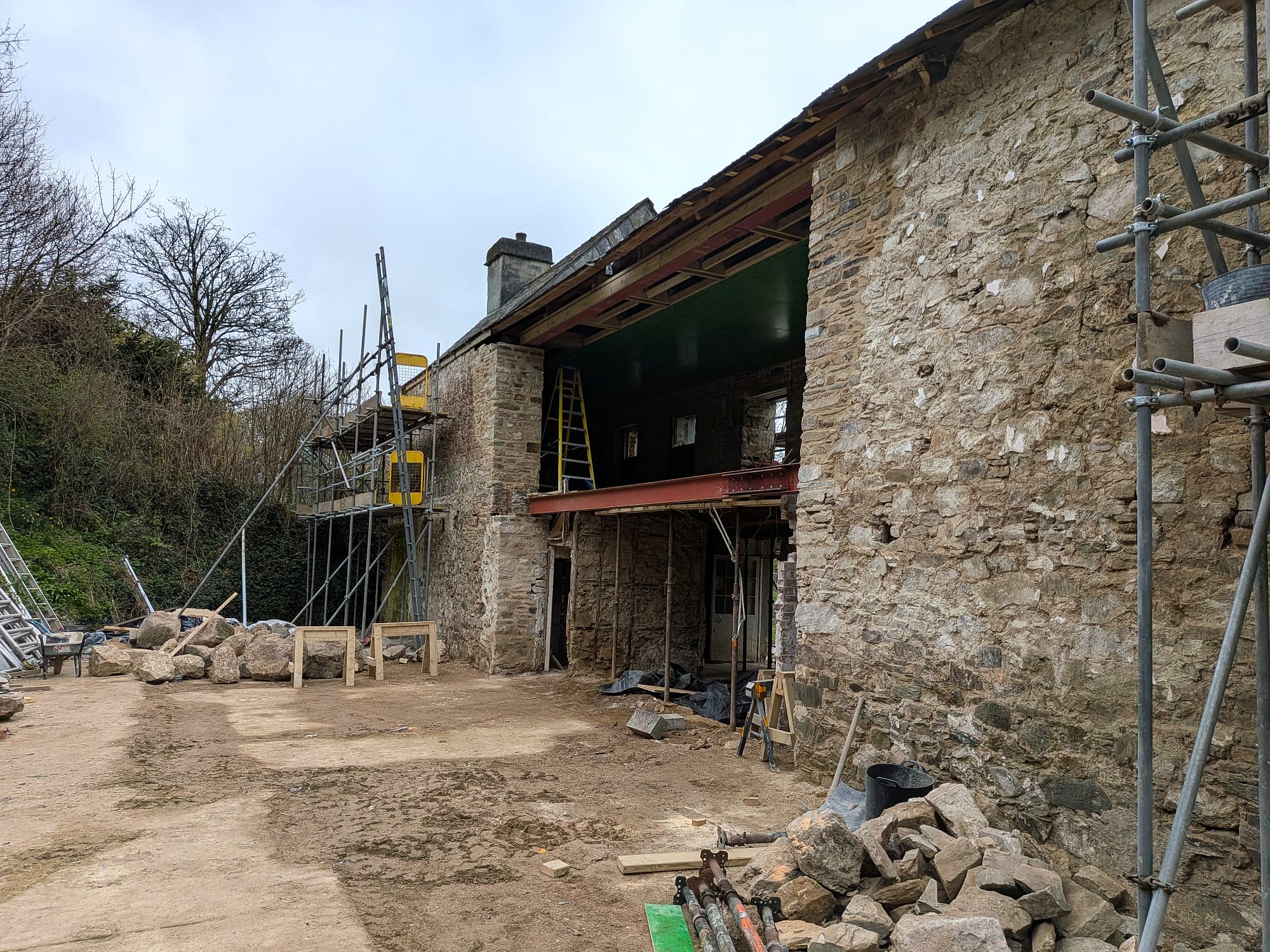
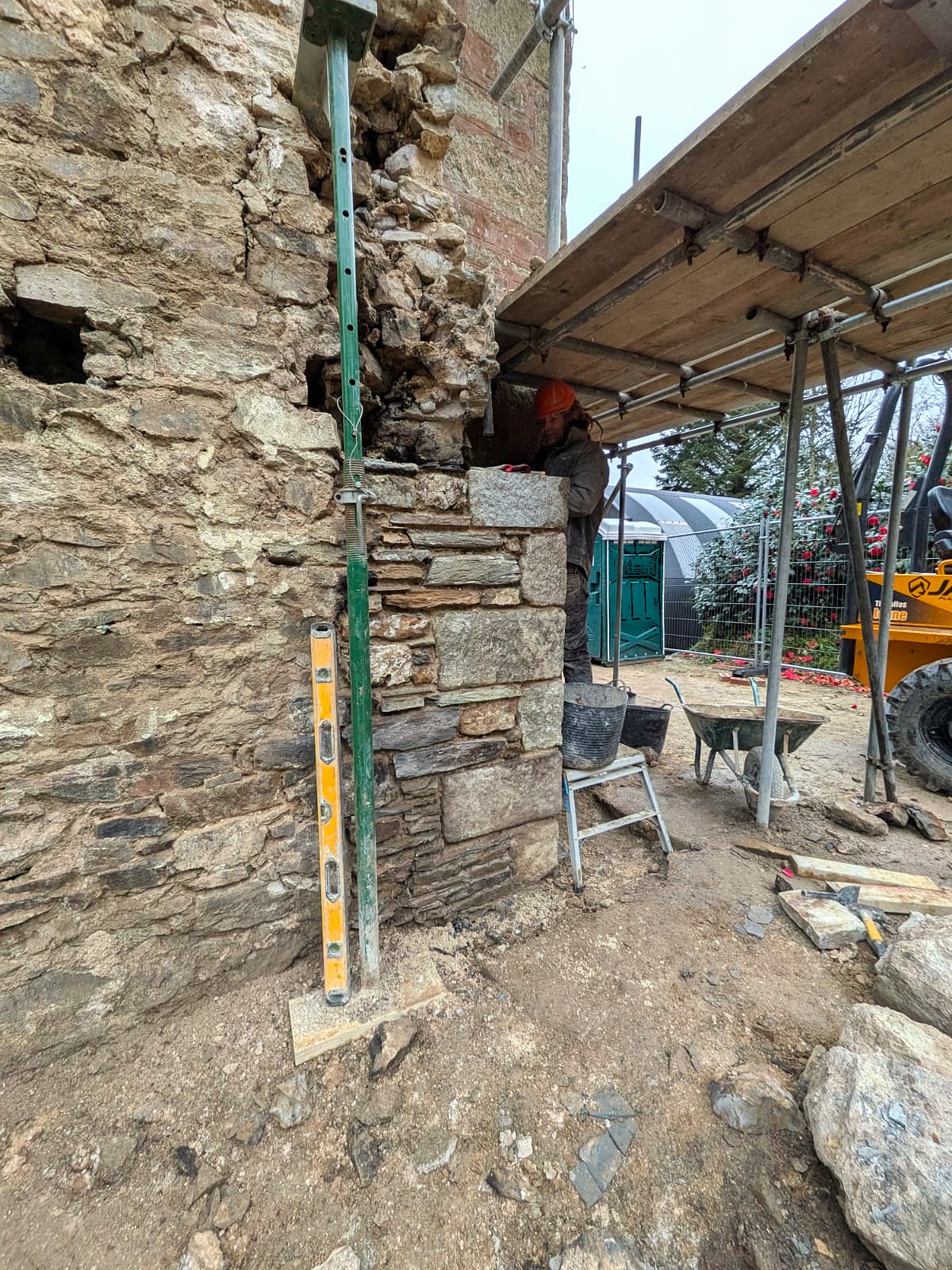
In March, work on the lintel replacement continued, with the masonry team moving on to each new opening as the previous one cured.  At the same time, we removed a huge two storey section of the back wall, to make way for the groundworks ahead of the timber framed extension.  The wall removal required a significant amount of propping whilst structural steelwork was installed.  Once the steel install was completed, the masons could start work on making good the stonework on each side of the removed section of wall. 
 
During this time, we also discovered that a small lean-to section of the original house would require more structural repair work than originally anticipated.  This section was originally going to be tied into the timber extension, but it became apparent that it would be more cost effective for it to be demolished and fully rebuilt in timber as part of the extension work.  We worked with the architects and S/E to adjust the design, and then proceeded with demolition and making good of the surrounding areas.
stone building with scaffolding
open second story building site
Stone Wall and Scaffolding

February

In February, the masons cracked on in earnest.  Every opening was propped with acros and needles, and the team made their way through over 70 new lintel installations (the walls are so thick that some openings are taking 6 or 7 new concrete lintels), and then built up the stonework back over each opening.  Each lintel replacement needed to remain propped for up to two weeks following the stonework build-up to allow the lime to dry.

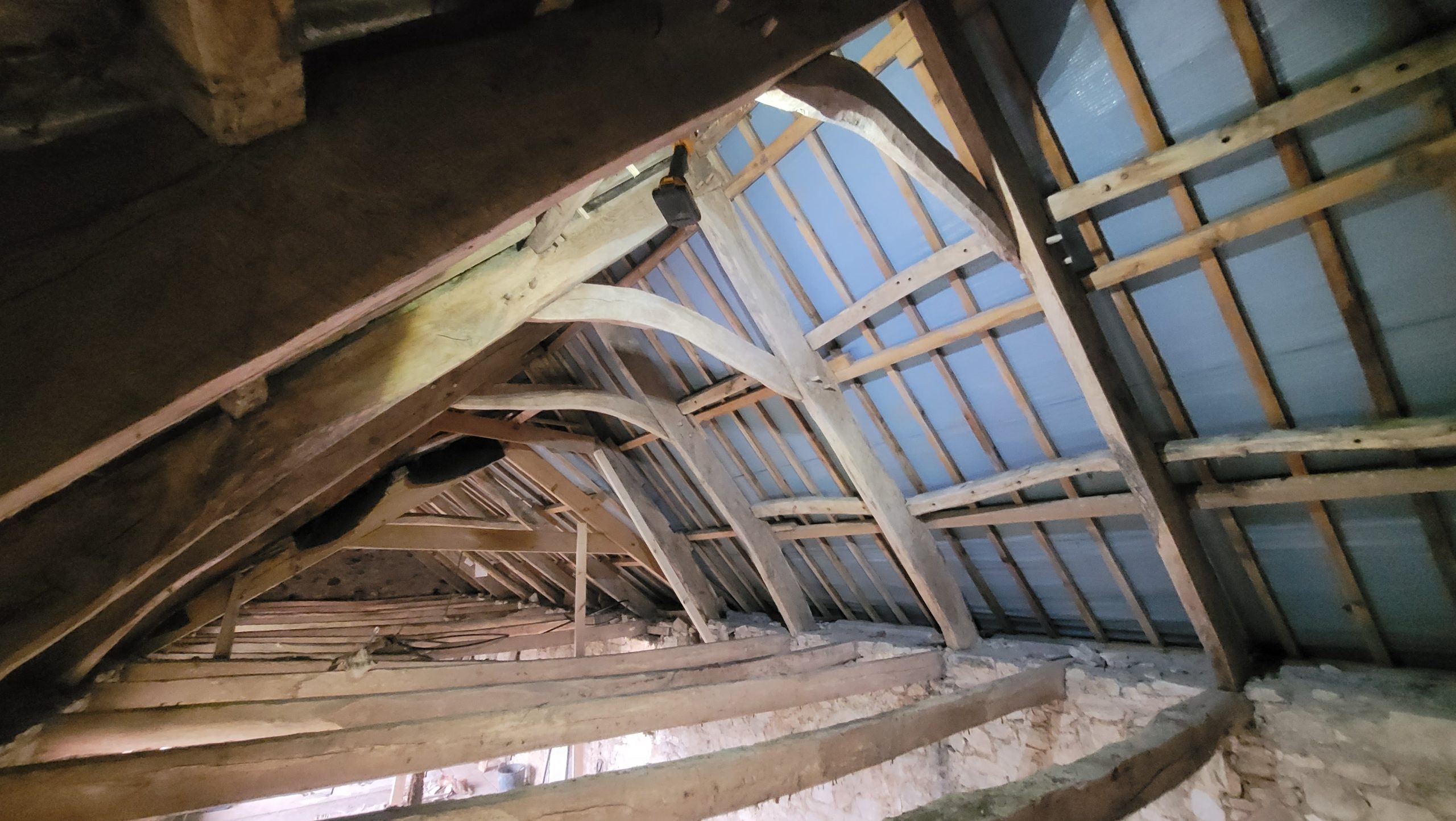
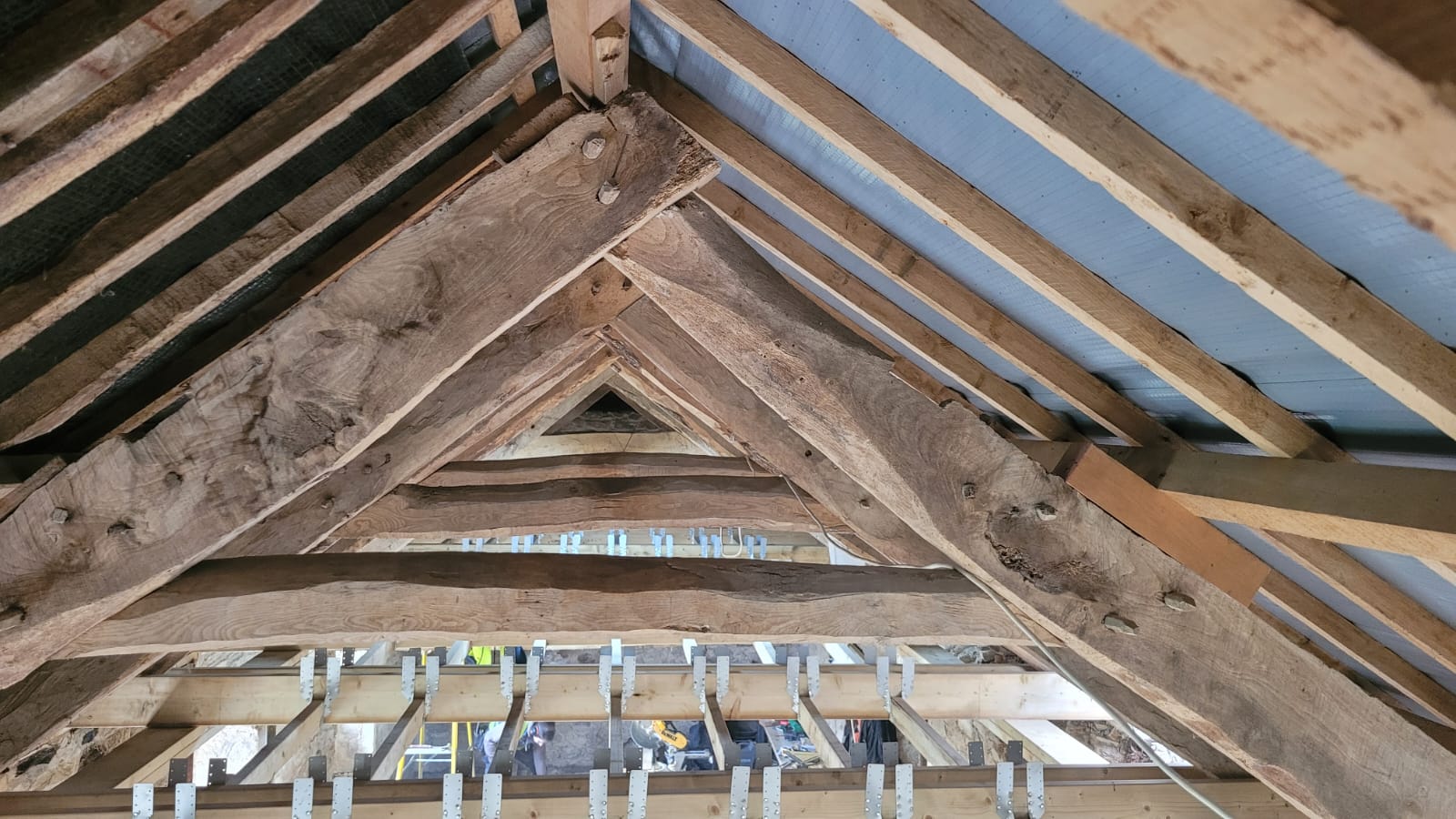
Alongside the masons, the carpentry team reinforced the existing roof trusses which were rotten at the wall plate where they met the stone wall, and installed new collar ties for the entire roof structure.  We needed to ensure that all structural remediation to the roof was completed before the end of April, including re-boarding the ceiling, as the presence of bats in the roof space would mean that we would be prohibited from undertaking any works to the roof between April and October. 
January

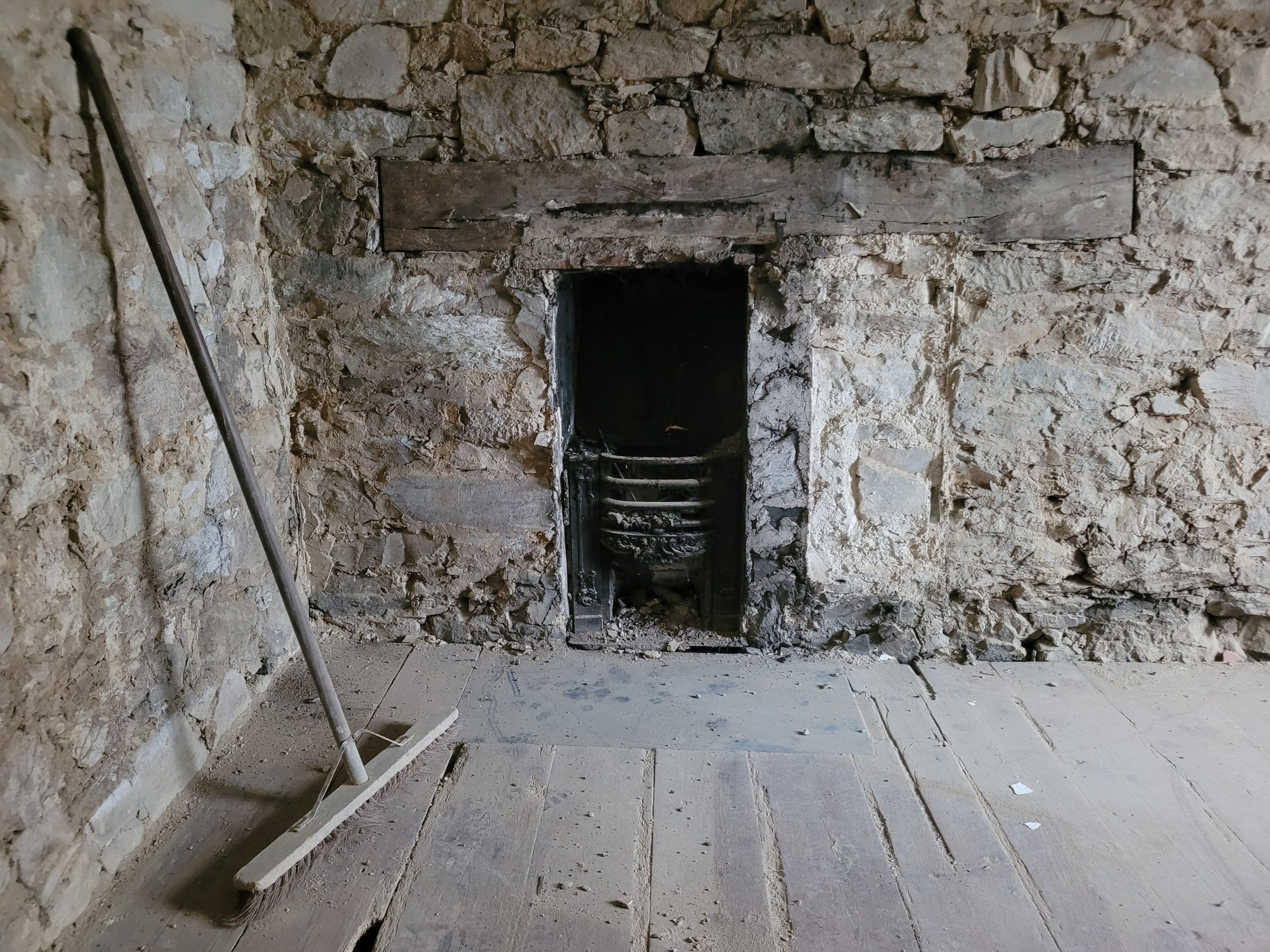
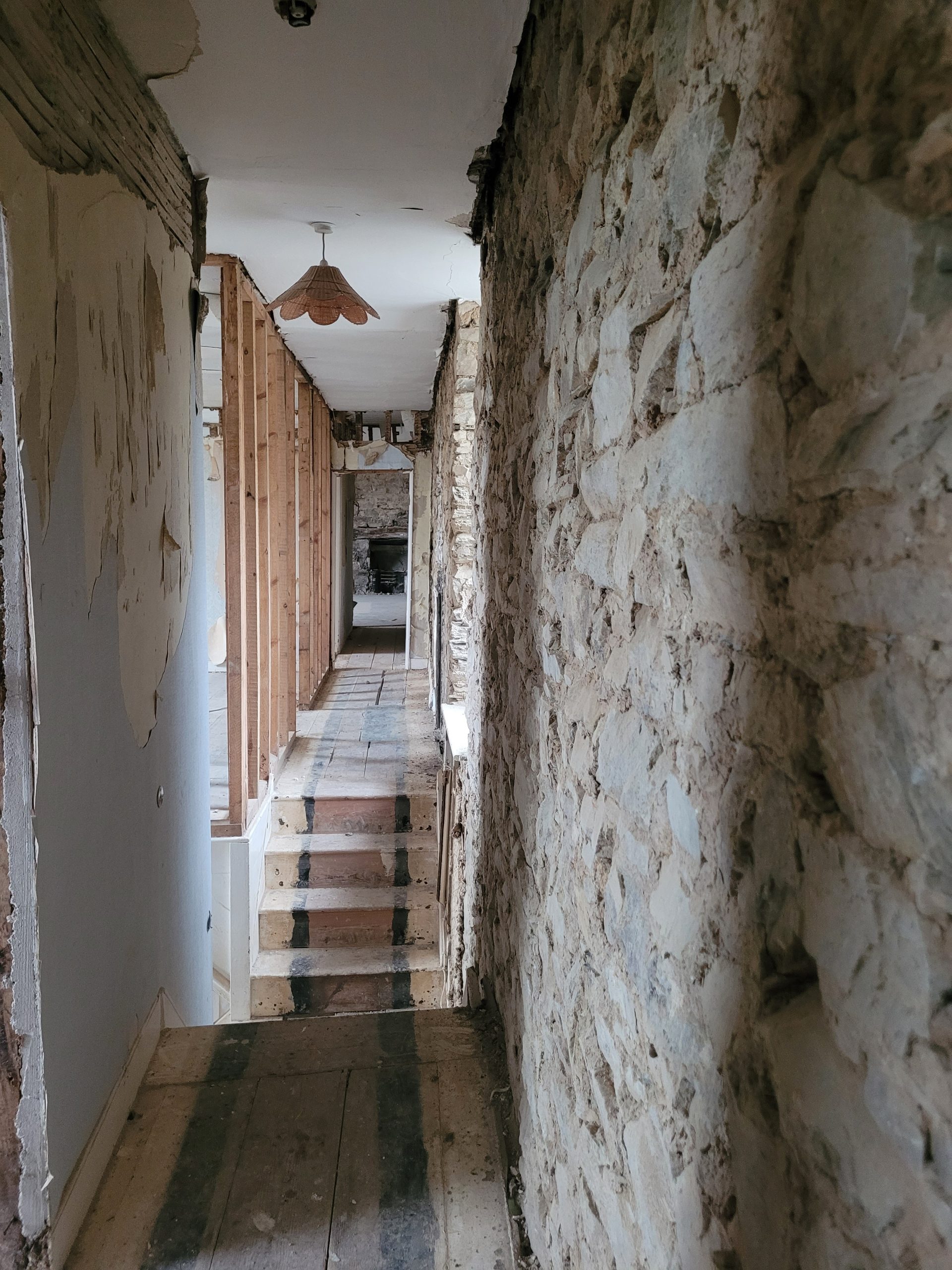
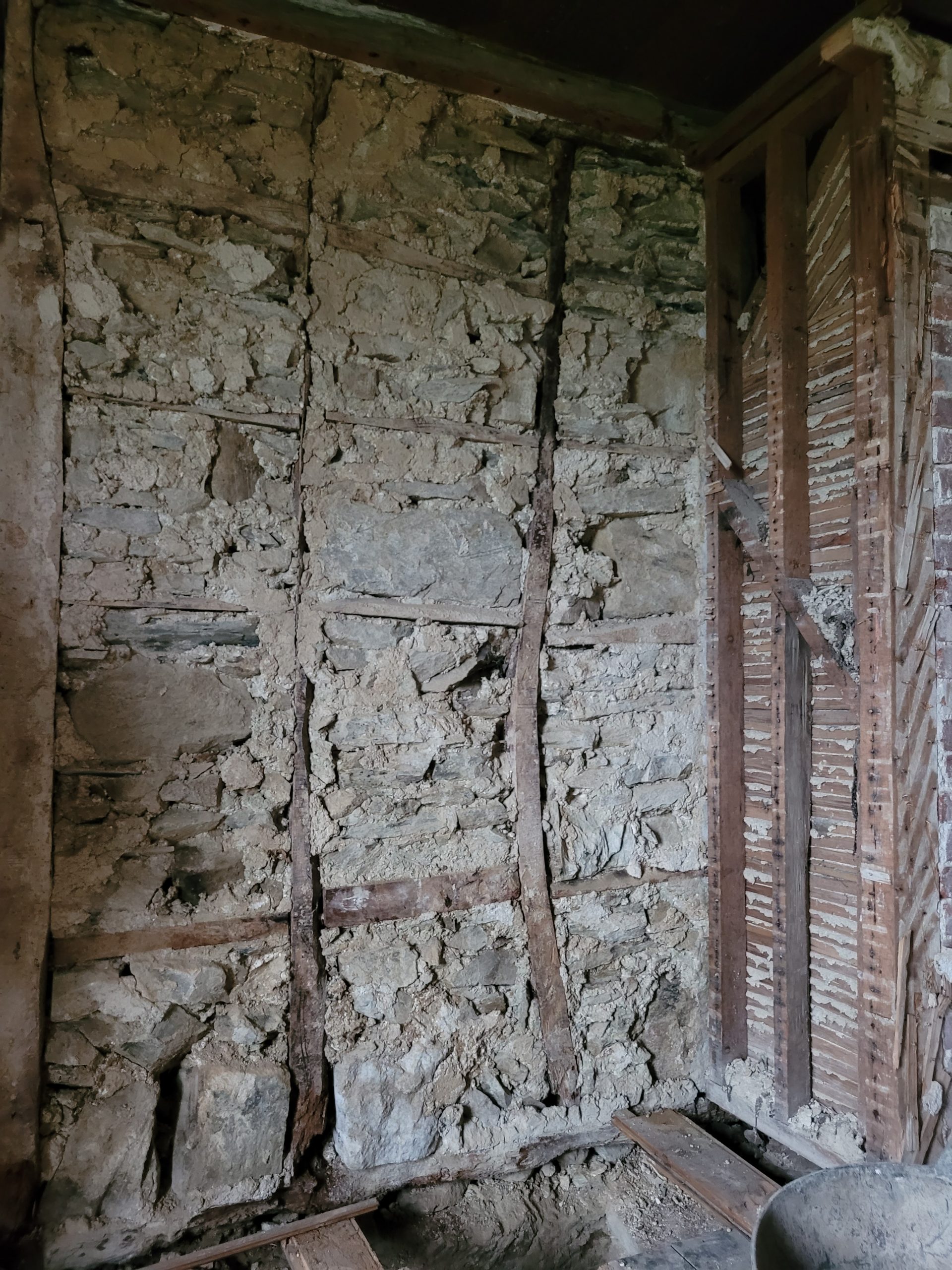
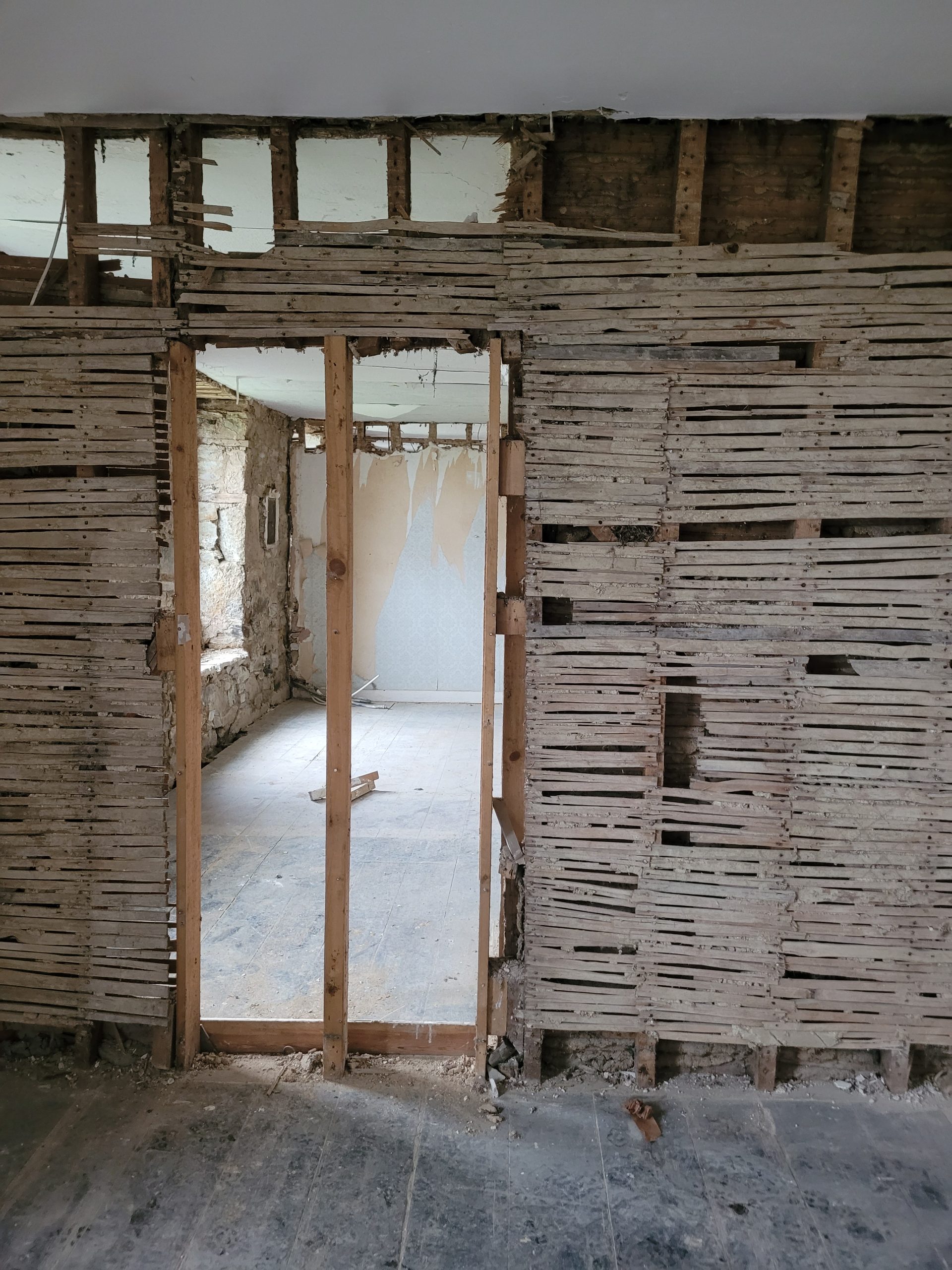
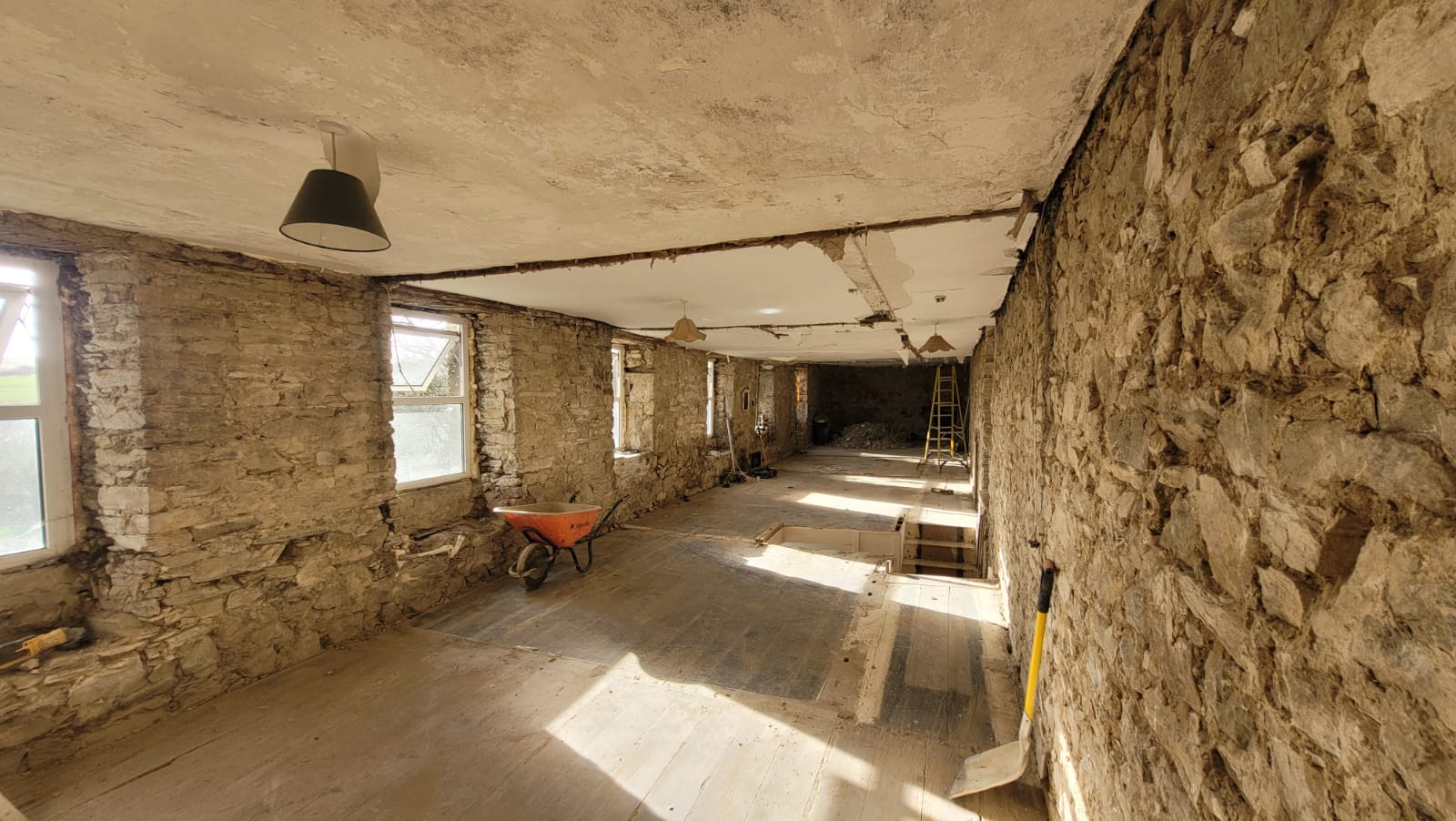
The first job on site at Nanstallon was an extensive strip out; opening up the building to allow the structural engineer access to assess the structural integrity of the building.  Areas that needed assessing included the general state of the stonework, the integrity of lintels spanning wall openings and the two enormous fireplaces at each end of the building.  Eventually, the first floor deck will also be removed in it’s entirety, but will be staying in situe until the remedial masonry on the first floor is completed.

We also demolished and removed a draughty single storey extension from the back of the building, to make way for a super insulated, dual-level timber framed extension.